
Emergency Garage Door Repair Near Me: What Southampton Homeowners Should Do First
If your garage door won’t open, won’t close, or came off its track, stop pulling cords and start with these steps: keep everyone clear of the door, disconnect nothing until you understand what failed, and call for a specialist. The most common mistake Southampton homeowners make in the first thirty minutes is yanking the red release cord while a broken spring still holds tension on the system. That single move can turn a manageable cable repair into a bent track and a replaced panel. Here’s the correct order of operations, and if you’d rather not work through it yourself, call (866) 809-2029.
The Four Emergencies That Need a Call Now
Not every garage door failure is urgent, but some are genuinely unsafe to leave sitting. In our experience, these four scenarios call for same-day professional attention because the door can move under load or drop without warning:
- A snapped torsion spring: You’ll usually hear a loud bang like a gunshot, followed by a door that feels impossibly heavy. The door may still be partly up. Do not try to force it down.
- A frayed or snapped cable: The door hangs unevenly, one side droops, or you see a loose steel strand whipping near the drum. Cables carry dangerous tension even when the door looks calm.
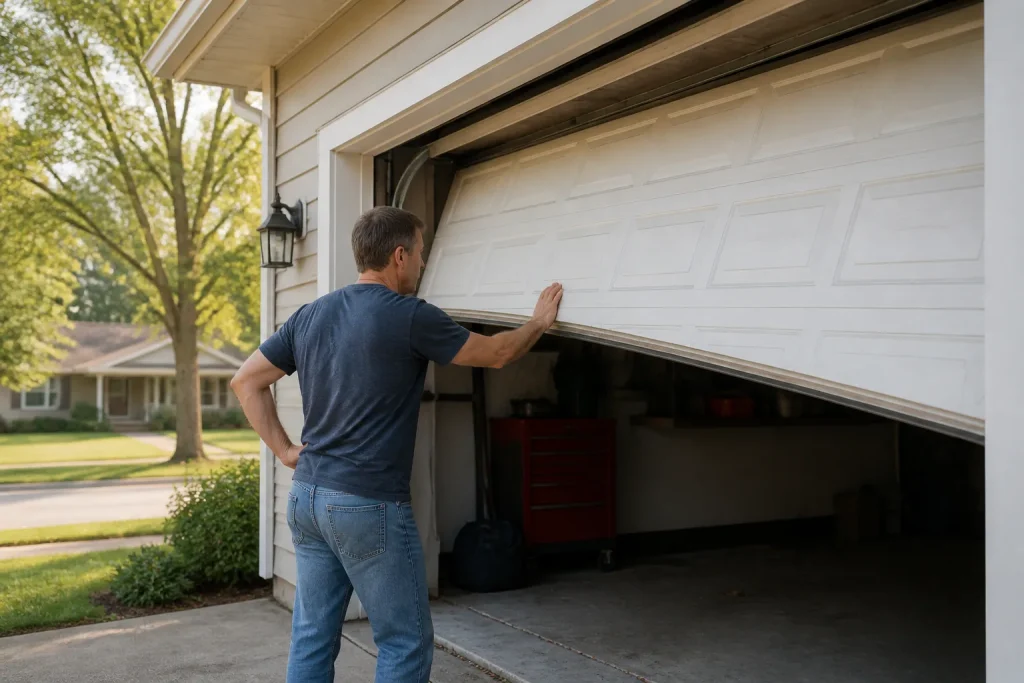
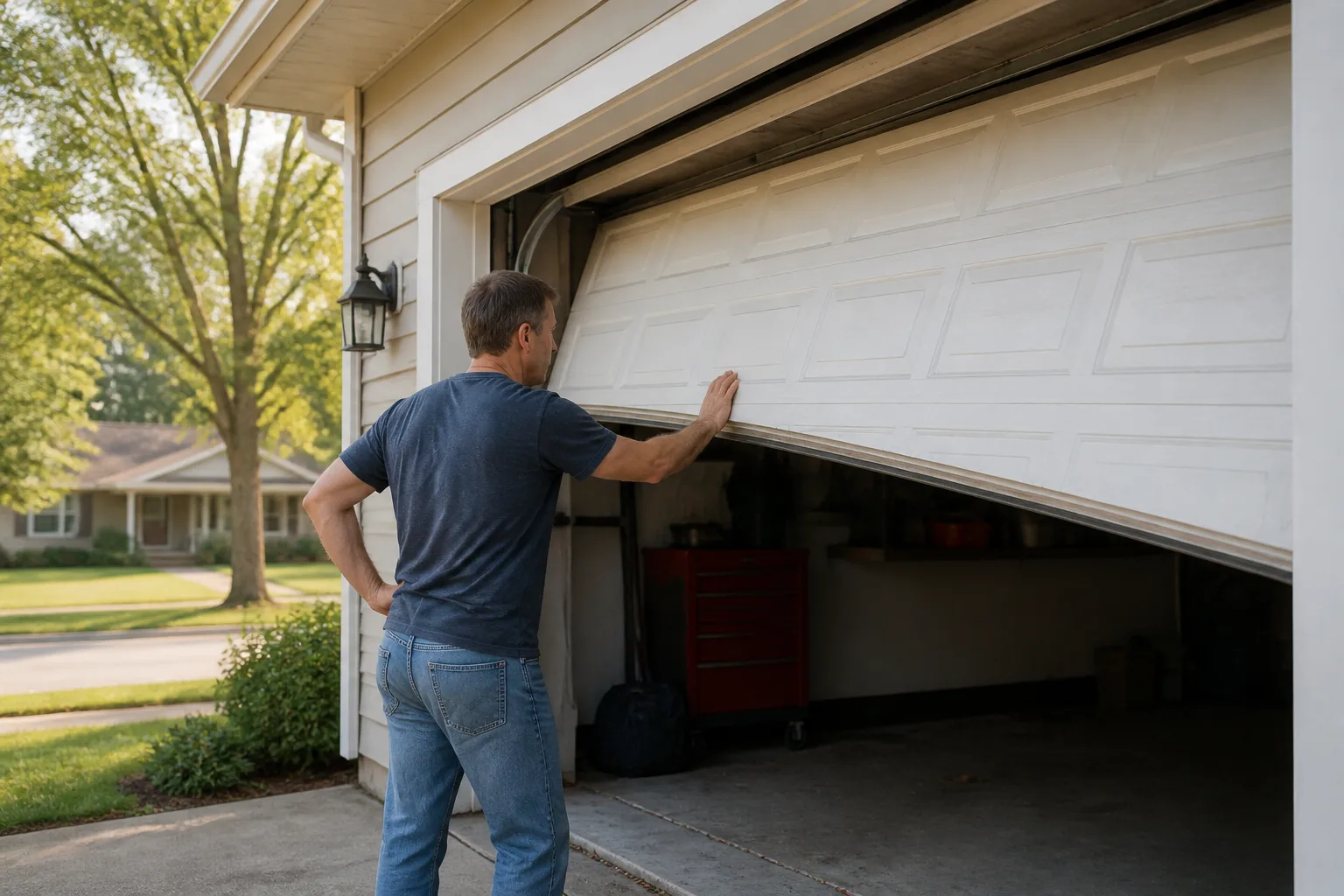
- Off-track or a bent roller: The door wedges at an angle, scrapes the frame, or a panel has visibly jumped the track. Running the opener here grinds the mechanism and can warp a section.
- Any failure with a vehicle trapped inside: If someone needs the car out, that’s a scheduling priority even if the mechanical fault itself isn’t urgent.
Two situations can usually wait until morning without extra risk: a door that still travels smoothly but hesitates or reverses at the bottom (often a sensor or opener logic issue), and a noisy or slow opener that otherwise completes its cycle. Watch those, but they don’t demand a night-time scramble. If you’re unsure which camp you’re in, we answer 24/7 and can help you sort it out over the phone.
Why the Emergency Release Order Matters
The correct sequence is counterintuitive. Release the tension before you disengage the trolley, not after. Here’s why: the red cord only disconnects the opener’s trolley from the door. It does nothing to relieve spring tension. On a door with a broken spring, gravity is holding the full weight of the door against a mechanism that’s no longer counterbalanced. Pull the release and the door can slam down or drop a few inches hard enough to bend a panel or catch a hand.
The safer order of operations looks like this:
- Keep people and pets out of the door’s path and stay clear of the springs and cables.
- Do not pull the red release cord if you suspect a broken spring or snapped cable. Leave the door coupled to the opener.
- If the door is fully closed and resting on the floor, leave it there. It’s in the safest position it can hold.
- Shine a light along the springs at the top of the door. A gap in a torsion spring or a stretched, separated extension spring confirms the diagnosis.
- Call a specialist. Spring and cable work is high-tension work, and it needs a trained technician, not a workaround.
Doors using a Craftsman or LiftMaster opener still follow this same logic. The release cord is an opener feature, not a safety override for a broken spring. Nobody should ever stand beneath a door in that state, regardless of brand.
How to Secure a Garage Door in the Down Position
Your first job after a failure is keeping the door closed and your home secure, especially with an attached garage that opens into the living space. The good news is you can usually lock the door down using hardware that’s already on it, no tools beyond maybe a pair of pliers.
On a single door with a manual slide-bolt lock, push the door firmly down, then slide the bolt into its strike plate on the track. On a double door, most setups have two levers, one on each side, and both should be engaged so neither panel can be lifted at a corner. If you don’t have a manual lock, a pair of locking pliers clamped tightly onto the vertical track just above a roller can hold most doors from the inside. Vise grips or a C-clamp work too. The goal is preventing the door from being lifted from the outside, not holding it under tension.
If the door is up and won’t come down, a bent coat hanger or a screwdriver slipped through the track and roller can sometimes block the door from sliding further, but this is temporary. For anything beyond a simple lock, it’s better to have a professional assess it. A specialist can make sure the door is stable and won’t drop while you’re sorting out the repair, and we can walk you through what to expect when you call.
What to Have Ready When You Call
An accurate, five-item summary when you call speeds up the diagnosis more than anything else. In our experience, technicians who diagnose by brand-specific logic rather than guesswork get to the right part faster when a homeowner can describe the door. Here’s the checklist:
- Door size: Measure width and height in inches if you can. A standard single door often runs about 8 to 9 feet wide; a double is closer to 16 feet.
- Opener brand and model: LiftMaster, Chamberlain, Craftsman, and Raynor are among the common systems we work on. The model sticker is usually on the back or side of the motor housing.
- Spring type: Torsion springs sit horizontally above the door on a shaft; extension springs run along the track on either side. Tell us which you see.
- The failure sound: A loud snap, a slow grind, a door that limps sideways, or a click with nothing happening all point in different directions.
- Whether a car is inside: This changes the timeline and what we’ll prioritize.
Have that ready and you’ll skip the back-and-forth. When we know the brand and the symptom, we can bring the right parts and set expectations before we arrive. For a deeper look at how these repairs work, our garage door repair page walks through common failures and what a specialist checks.
What Happens When You Call
When a door fails, homeowners often worry most about cost and about getting stuck with an invoice bigger than the quote. We want to answer that before you ask. The price is set per job by a written estimate, and you approve it before any work begins. Spring and cable jobs can sometimes be resolved the same day when parts are on hand, which is where a parts supply that lives within our own operation, rather than an outside vendor, cuts down the wait that sidelines many repairs.
That said, some failures need parts ordered and the work scheduled. On an emergency call for a snapped spring or bent track, we diagnose, explain the options, and set the price in writing. Our technicians have up to 14 years of experience, and because we specialize in garage doors only, the diagnosis comes from a single-trade specialist rather than a general handyman guessing at mechanisms they rarely touch.
The middle of a failure isn’t the time for a full replacement if a repair will do. A well-set door usually has plenty of life left. Still, if the fault reveals something terminal, an honest assessment helps, and we’ll tell you plainly when a repair is the smarter call. If you’re looking at opener trouble specifically, our garage door opener repair page covers what’s fixable and what isn’t.
The Security Window Before the Repair
Between the breakdown and the repair visit, your attached garage is the weakest point in the house. In Southampton homes where the garage shares a wall with the living space, a door that won’t close leaves an open path indoors. These steps buy you time and peace of mind until the pro arrives:
- Secure the door down using the locking method covered above.
- Relock the entry door between the garage and the house. That door is your last line while the overhead door is out.
- Move vehicles and valuables out of view if the door won’t close fully.
- Don’t prop the door open to “air out” the garage while it’s in this state, even for a quick trip.
- Note the fault so you can describe it later. A photo of the springs and the model sticker helps the technician on arrival.
The longer a door sits unsecured, the more opportunity there is. We’d rather you call when the door first sticks than a day later. Our team at Southampton Garage Door Repair Pros stays focused on garage doors so the guidance you get is specific, not general. We answer 24/7. Fast dispatch from 7am to 7pm, Sunday through Friday. A call outside dispatch hours is booked into the next opening.
When to Call a Pro
Call a professional the moment a spring snaps, a cable frays, a door leaves its track, or you can’t safely secure the door. Those are high-tension jobs where a mistake can hurt someone or damage the door further. Springs and cables are dangerous and shouldn’t be a weekend project. We’ve seen enough doors turn into bigger, costlier repairs from a single wrong move to say with confidence: leave the mechanism to a specialist. For a manual lock or a sensor you can clean, a little help over the phone goes a long way. We answer 24/7 and can talk you through what’s safe to try. If the door needs replacement rather than repair, our garage door installation page covers what the job involves.
Frequently Asked Questions
No. Pulling the red cord while a broken spring still holds tension can let the door slam down or drop hard. Keep the door coupled to the opener and leave it down. Call a specialist who can release the tension safely, then address the spring.
It’s an emergency if a spring is snapped, a cable is frayed or hanging, the door is off its track, or a vehicle is trapped inside. Those need prompt attention. A noisy opener or a door that hesitates at the bottom can usually wait until a normal weekday visit.
Yes, in most cases. Use the manual slide-bolt lock if you have one, engage both levers on a double door, or clamp locking pliers to the track above a roller to stop the door lifting. This keeps the door secure until the repair, but it doesn’t fix the underlying fault.
Have the door width and height, the opener brand and model, whether you have torsion or extension springs, and the sound the failure made. Note whether a car is inside. That detail set lets a specialist diagnose faster and bring the right parts.
The Bottom Line
The first thirty minutes after a garage door fails matter more than most homeowners realize. Keep clear of the springs and cables, don’t pull the release cord on a broken-spring door, secure the door down with the lock you already have, and have your door details ready when you call. Those steps protect the door, your home, and your wallet, and they let a specialist diagnose faster when they arrive. If you’re in Southampton and need help, Southampton Garage Door Repair Pros offers free estimates – call (866) 809-2029. We answer 24/7. Fast dispatch from 7am to 7pm, Sunday through Friday. Same-day service is often possible on repair calls, and the price is always quoted and agreed before any work starts.
Written by the team at Southampton Garage Door Repair Pros.
Need Garage Door Help?
Call Southampton Garage Door Repair Pros - the local pro we connect you with is licensed and insured, here with fast help in Southampton.
(866) 809-2029